This profile is part of an ongoing series on the Chittenden County business community, produced by the Greater Burlington Industrial Corporation (GBIC).
It’s 10:30 on a Tuesday night. A patient needs a prescription refilled before a trip. She picks up her phone, calls her doctor’s office, and has a conversation with an AI agent. Within minutes, the request is logged, routed, and sent to the pharmacy—no hold music, no callback—and her prescription will be ready first thing in the morning.
That same evening, a pediatrician in Texas receives another message. A parent had texted her child’s symptoms to the office. Based on the language in the message, the text was flagged by AI as urgent and routed immediately to the doctor on call, who recognized that the child was in sepsis and directed the family to the emergency room.
Both conversations were relayed through OhMD, a Burlington-based software company that automates routine exchanges for medical practices, while ensuring the most important messages reach the right person. The idea is straightforward: separate the calls that require a human from the ones that don’t, and let staff focus on the calls that matter most.

The platform behind the text.
OhMD uses AI to automate routine patient communications—prescription refills, appointment scheduling, office directions—via voice and text message. The platform is seamless to the patient and does not require a separate app, portal login, or password—all they need to communicate with their doctor’s office is the phone number.
The software integrates with all major electronic health record systems and is HIPAA-compliant. It scales from solo practitioners to multi-hundred-physician group practices, and works across every specialty. Today the company serves over a thousand practices in all 50 states.
OhMD addresses a crisis in medical front offices where, according to the Medical Group Management Association, annual staff turnover runs at 40 percent dragging down both patient experience and the bottom line.
“It’s a staffing crisis, a service problem, and a revenue leak all at once,” says founder and CEO, Ethan Bechtel. The other number he cites: 40 cents of every dollar spent on healthcare goes to overhead. “That’s a trillion-dollar problem that’s growing as an aging population strains a system already short on providers.”
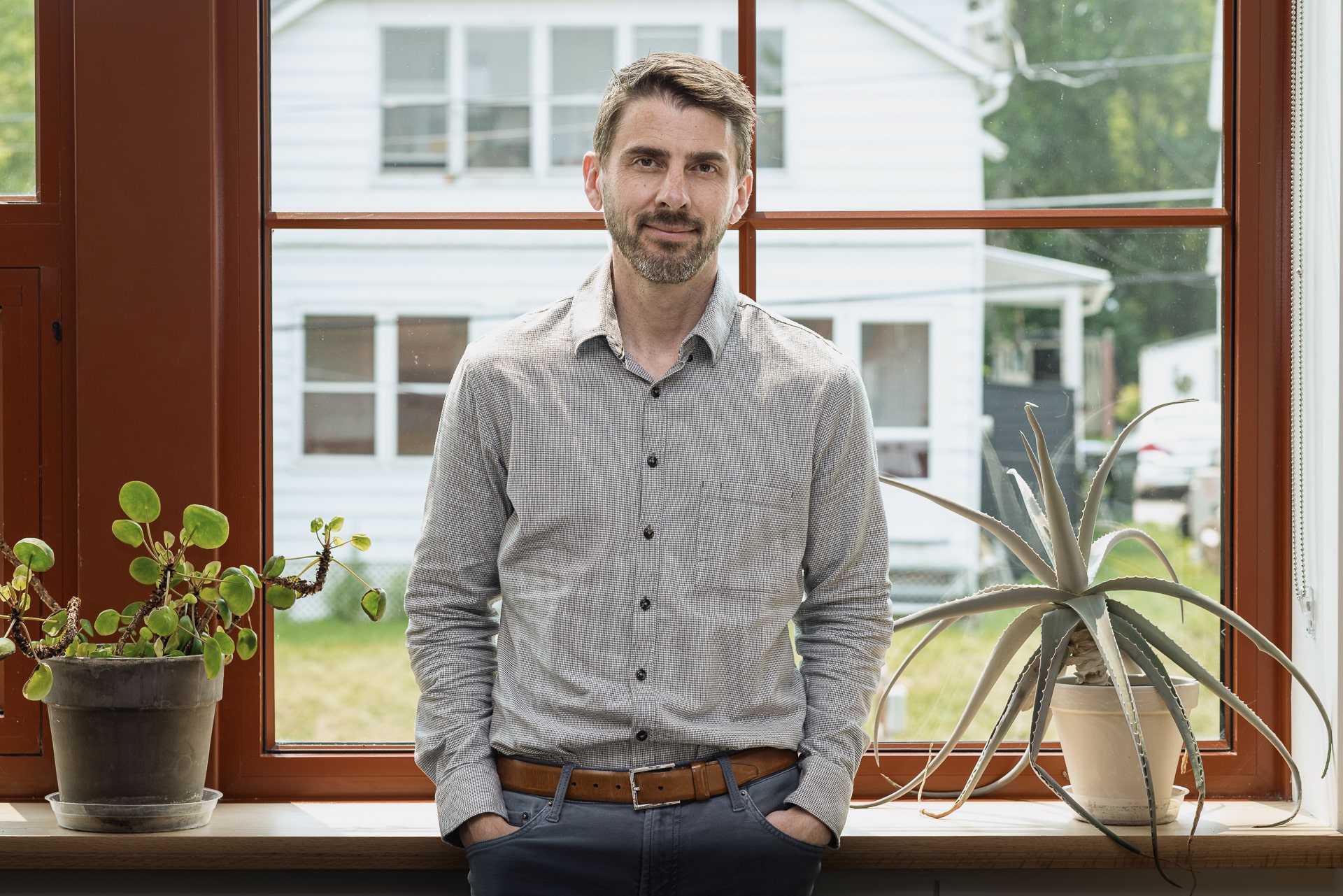
Bechtel sees an opportunity for technology to solve one small piece of the challenge: the front-desk phone queue. “If I need a refill, give me the fastest path,” he says. “I don’t need to talk to a person. Let’s leverage AI tools where they make sense, not where they replace the human element of healthcare.”
The platform has found traction with All Brains Belong in Vermont, a practice focused on neurodivergent patients. Mel Houser, M.D. says the organization began offering text messaging as an accessibility accommodation, but with a liability tradeoff—patients were required to sign off on communicating outside HIPAA-compliant channels. OhMD eliminated that tradeoff. “Our patients—many of whom are autistic, ADHD, and/or process the world differently—can’t always use traditional phone calls or patient portals,” Houser wrote recently. “It doesn’t work for their brains.” With OhMD, they get both accessibility and security.
Burlington built.
OhMD got its start at the Vermont Center for Emerging Technologies (VCET), where Bechtel found early support among a network of founders. Following a surge in growth during COVID-19, the growing company moved to HULA, a coworking and private office space on Burlington’s waterfront.
“Vermont offers entrepreneurs a lot of support, which is so important to the overall business ecosystem,” says Frank Cioffi, president of the Greater Burlington Industrial Corporation. “Not only are companies like OhMD creating jobs, they are bringing innovative ideas and technologies to solving problems. You never know where the next OnLogic or Burton will come from.”

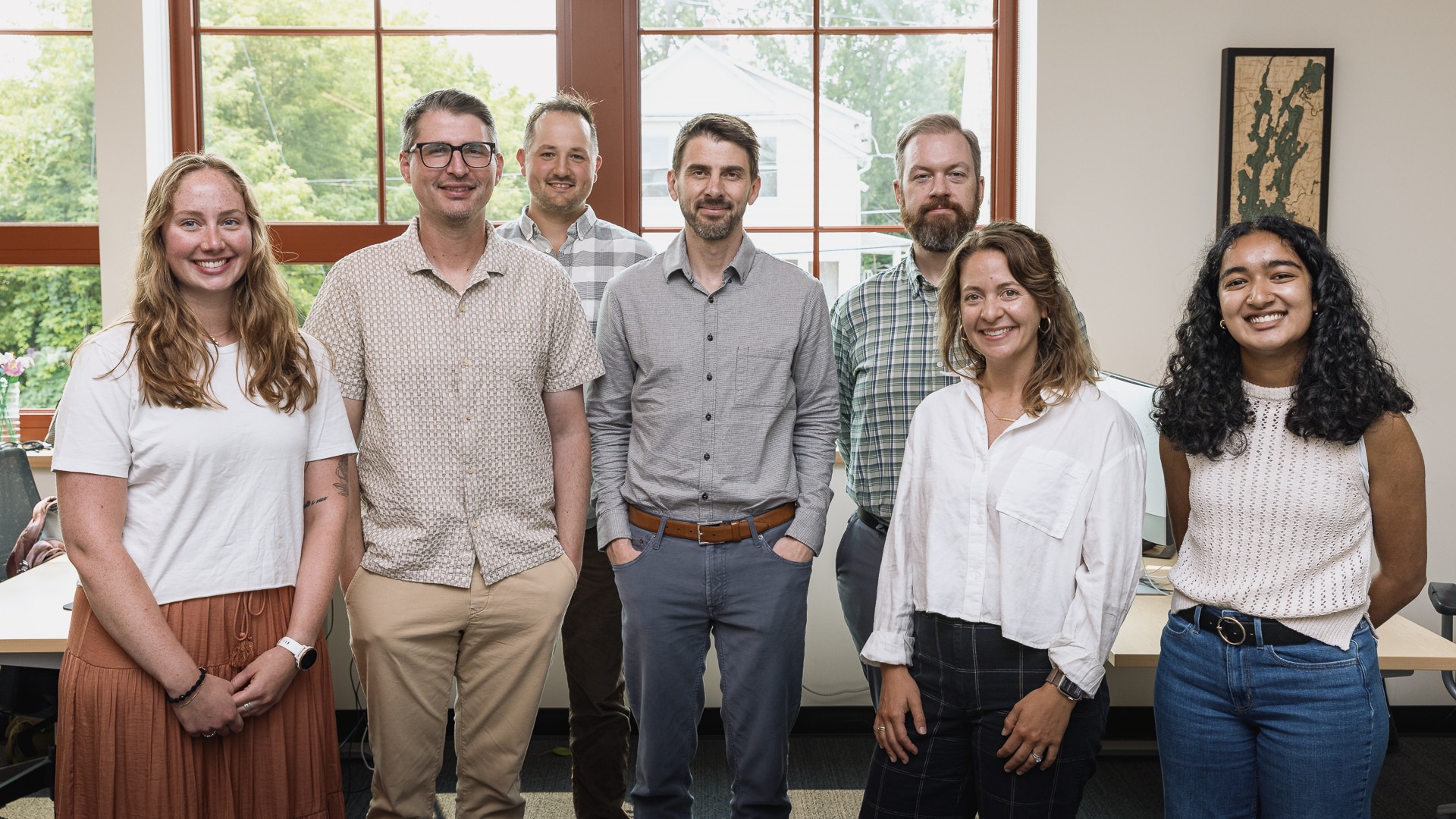
About half of the OhMD team works on product development, while the other half handles sales, marketing, and customer service—a structure Bechtel designed deliberately to keep a feedback loop running between the people selling the product and the engineers building it. With the leadership team, Bechtel focuses on setting strategic vision, and making sure the company has the resources it needs to execute that vision.
His intentionality around growth shows up in that strategy. Bechtel is focused on how AI can automate the things people want to be automated, and how it can elevate human to human communication where it’s needed. This, he says, is necessary for a strained healthcare system.
“We don’t have enough providers to serve the number of people who need care, so we need to figure out how to do more with less. But we have to be really thoughtful about how we deploy technology. You can’t just drop AI on everyone.”
For Bechtel, who has spent his entire career in and around healthcare, the work is both personal and professional. Following a snowboard injury in his adolescence that revealed a bone condition, he spent many years cycling through waiting rooms himself. Through a dozen broken arms, three surgeries, and a cancer scare, he knows what it feels like to be the worried person on hold. He’s been building toward a solution ever since.
“Navigating healthcare is hard enough when you’re healthy,” he says. “When you’re dealing with something difficult, every moment of friction becomes unbearable.”
About GBIC and Cynosure
The Greater Burlington Industrial Corporation helps solve problems with leading employers to create economic well-being for Vermonters. Cynosure is the real estate arm of GBIC, focused on developing industrial properties to support local economic growth.